
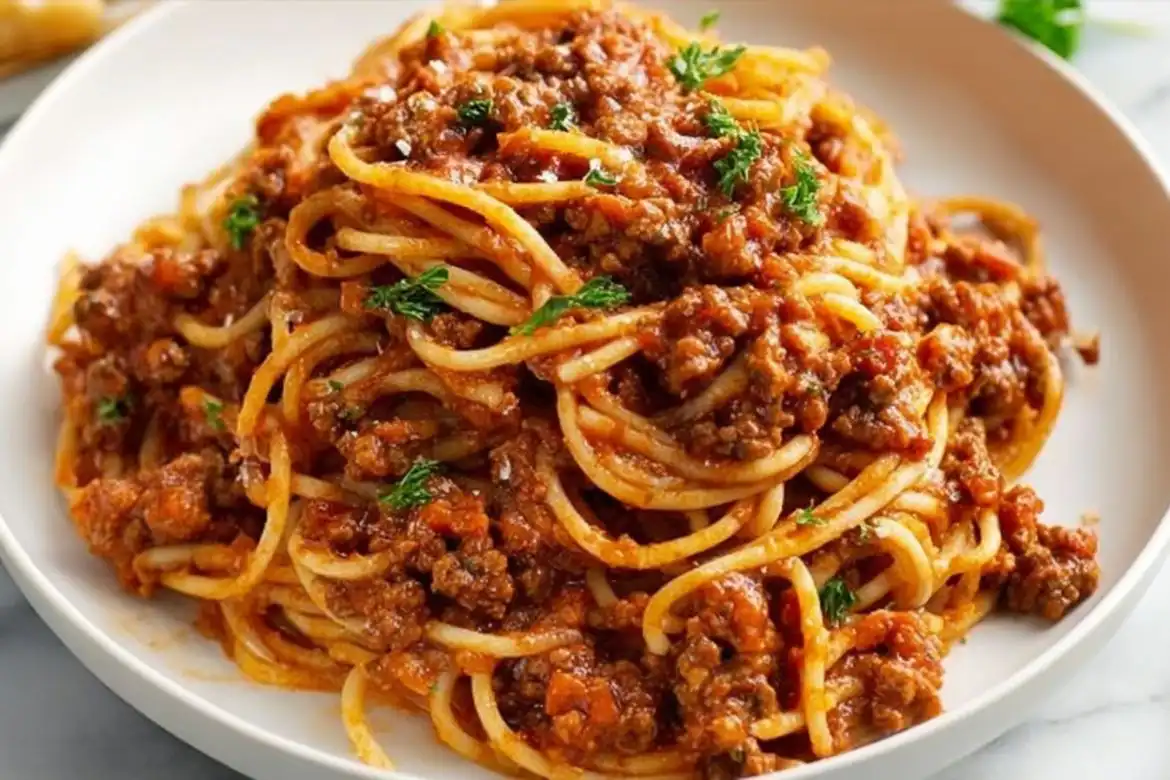
Table of Contents
Why This Recipe Works
I discovered the power of this spaghetti meat sauce through years of testing different ratios and cooking methods. The combination of crushed tomatoes, diced tomatoes, and tomato paste creates a multi-layered tomato foundation that prevents the sauce from tasting one-dimensional or canned. When you brown the ground beef first and build flavor through proper searing, you develop fond on the pot bottom that enriches every spoonful.
This recipe’s secret lies in the 45-minute simmer time, which allows the seasonings to marry and the meat to become incredibly tender. The partial cover prevents over-reduction while still concentrating flavors naturally. I’ve tested this sauce both rushed and slow-cooked, and the patience always pays dividends in depth and richness.
The ratio of beef to tomato base prevents the sauce from becoming either too heavy or too broth-like. After countless batches, I found that two pounds of ground beef balances perfectly with the tomato trio and creates the ideal meat-to-sauce proportion for coating spaghetti without overwhelming it.
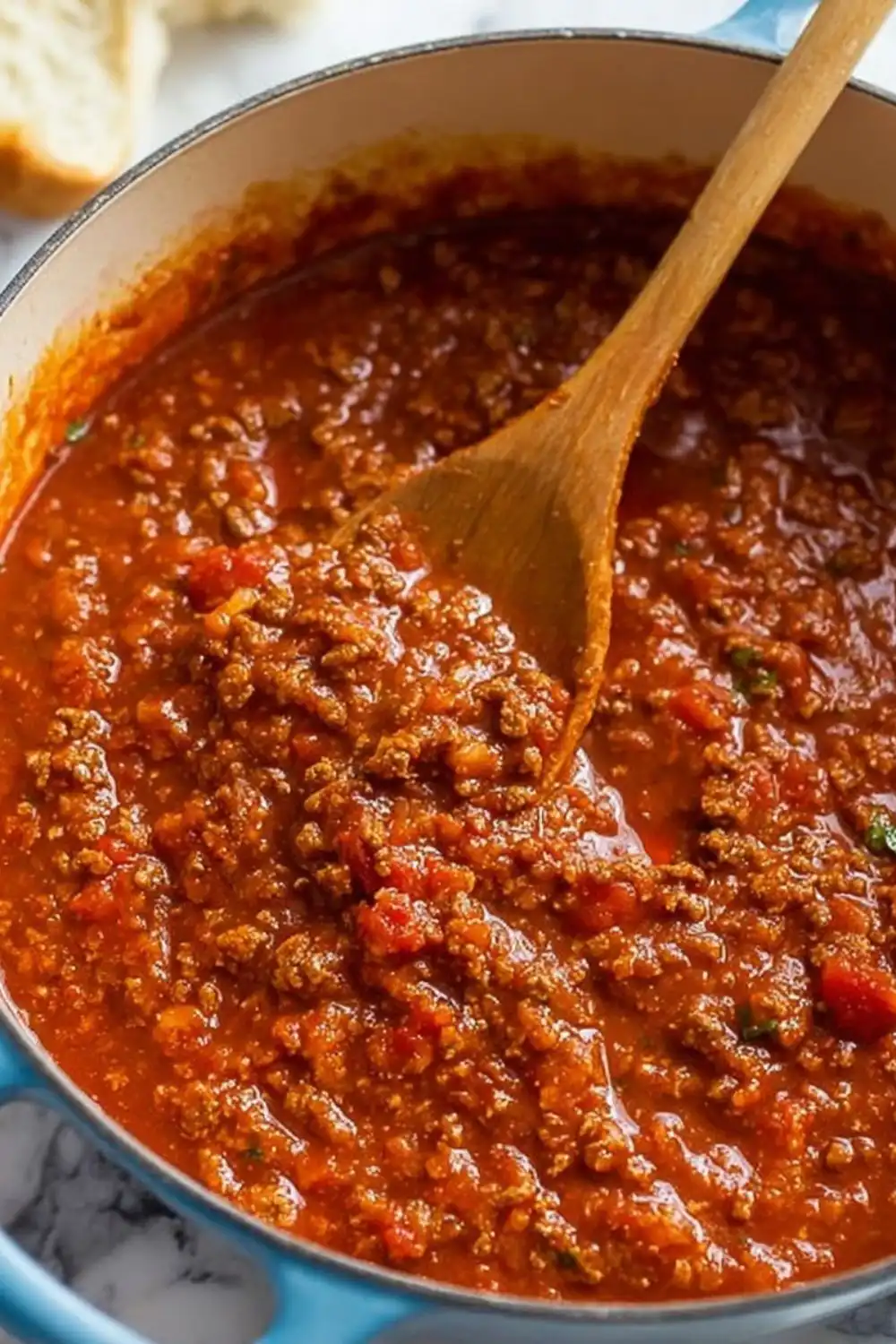
Ingredients
| Ingredient | Quantity | Notes & Alternatives |
| Olive oil | 2 tablespoons | Use extra-virgin for deeper flavor; vegetable oil works if needed |
| Yellow onion | 1 large, diced | Sweet onion preferred; use white or red as alternatives |
| Ground beef | 2 lbs. | 80/20 blend optimal; ground veal or ground beef-veal blend adds depth |
| Salt | To taste plus 2 tsp | Sea salt preferred; season beef before cooking |
| Ground black pepper | To taste | Freshly ground delivers superior flavor |
| Green bell pepper | 1, finely diced | Red pepper adds sweetness; yellow for mildness |
| Garlic | 3 cloves, minced | Fresh garlic essential; minced or grated work equally well |
| Beef broth | 3/4 cup | Substitute for wine; add 1 Tbsp red wine vinegar for acidity |
| Tomato paste | 6 oz. | Double-concentrated paste adds umami richness |
| Worcestershire sauce | 2 teaspoons | Flavor enhancer; creates depth without distinct taste |
| Hot sauce | 2 teaspoons | Frank’s brand recommended; adds complexity, not heat |
| Sugar | 2 tablespoons | Balances tomato acidity; brown sugar adds molasses depth |
| Crushed tomatoes | 28 oz. | San Marzano preferred; whole canned tomatoes work when crushed |
| Diced tomatoes | 14.5 oz., undrained | Liquid included for body; fire-roasted adds smokiness |
| Tomato sauce | 8 oz. | Simple tomato sauce without added spices; adds smoothness |
| Bay leaves | 2 | Remove before serving; adds subtle herbaceous backbone |
| Dried parsley | 2 teaspoons | Fresh parsley added at finish for brightness |
| Dried basil | 2 teaspoons | Classic Italian herb; essential to authentic flavor |
| Mustard powder | 2 teaspoons | Hidden flavor booster; amplifies savory notes subtly |
| Dried oregano | 1.5 teaspoons | Mediterranean staple; use Italian oregano for authentic taste |
| Red pepper flakes | 2 pinches | Provides warmth without spiciness; adjust to preference |
Spaghetti Meat Sauce
- Total Time: 1 hour 15 minutes
- Yield: 6 servings 1x
Description
This spaghetti meat sauce is rich, hearty, and slow simmered to perfection. Made with ground beef, tomatoes, and a blend of flavorful seasonings, it creates a thick, comforting sauce that pairs perfectly with pasta. A classic homemade dinner that’s satisfying, bold, and even better the next day.
Ingredients
2 tablespoons olive oil
1 large yellow onion, diced
2 lbs ground beef
Salt and pepper, to taste
1 green bell pepper, finely diced
3 cloves garlic, minced
3/4 cup dry red wine
6 oz tomato paste
2 teaspoons Worcestershire sauce
2 teaspoons hot sauce
2 tablespoons sugar
28 oz crushed tomatoes
14.5 oz diced tomatoes, undrained
8 oz tomato sauce
2 bay leaves
2 teaspoons dried parsley
2 teaspoons dried basil
2 teaspoons mustard powder
2 teaspoons salt
1.5 teaspoons oregano
2 pinches red pepper flakes
Instructions
1. Heat olive oil in a large pot over medium heat. Add diced onions and cook for about 8 minutes until softened
2. Season the ground beef with salt and pepper. Increase heat to medium high, add the beef, and cook while breaking it apart for 5 minutes
3. Add garlic and bell peppers and cook for another 3 minutes
4. Drain excess grease. Add red wine and scrape the bottom of the pot. Cook for 5 to 6 minutes until reduced and alcohol smell is gone
5. Stir in the seasonings, tomato paste, Worcestershire sauce, hot sauce, and sugar until evenly combined
6. Add crushed tomatoes, diced tomatoes, tomato sauce, and bay leaves. Bring to a boil
7. Reduce heat to a simmer, partially cover, and cook for 45 minutes until thickened. Stir occasionally
8. Serve over spaghetti or pasta of choice with garlic bread
Notes
For deeper flavor, use a mix of ground beef and Italian sausage
Red wine options like Cabernet Sauvignon or Merlot work best, or substitute with beef broth and a splash of vinegar
A small amount of cream cheese or heavy cream can be added at the end for a richer sauce
The hot sauce and Worcestershire enhance flavor without making it spicy
This sauce tastes even better the next day and freezes well
- Prep Time: 15 minutes
- Cook Time: 1 hour
- Category: Dinner
- Method: Simmering
- Cuisine: Italian American
Nutrition
- Serving Size: 1 serving
- Calories: 420
- Sugar: 10g
- Sodium: 780mg
- Fat: 22g
- Saturated Fat: 8g
- Unsaturated Fat: 12g
- Trans Fat: 0g
- Carbohydrates: 18g
- Fiber: 4g
- Protein: 30g
- Cholesterol: 85mg
Step-by-Step Instructions
Prepare the Aromatics
- Heat two tablespoons of olive oil in a large pot over medium heat until shimmering but not smoking.
- Add the diced yellow onion and cook, stirring occasionally, for eight minutes until softened and translucent at the edges.
- The onions should release their natural moisture and begin to turn golden; do not brown them at this stage.
Brown the Meat
- Season the ground beef generously with salt and pepper in a separate bowl, breaking it into small pieces with your hands.
- Increase heat to medium-high and add the seasoned ground beef to the pot with the softened onions.
- Cook the beef, stirring frequently and breaking it into smaller crumbles with a wooden spoon, for five minutes until no pink remains.
- Add the minced garlic and finely diced green bell pepper, stirring constantly to combine.
- Continue cooking for three more minutes until the pepper begins to soften and the garlic becomes fragrant.
Deglaze and Build Flavor
- Drain the excess grease from the pot using a fine-mesh strainer or by tilting and using a spoon to collect fat.
- Pour the beef broth into the pot and use a silicone spatula to scrape the browned bits from the pot bottom, a technique called deglazing.
- These browned bits, called fond, contain concentrated flavor that enriches the entire sauce.
- Allow the broth to simmer for five to six minutes, stirring occasionally, until most of the liquid reduces and the alcohol smell dissipates (if using wine).
Combine Seasonings and Tomatoes
- Add the dried parsley, dried basil, mustard powder, remaining salt, dried oregano, and red pepper flakes to the pot.
- Stir thoroughly to distribute seasonings evenly throughout the meat mixture.
- Add the tomato paste and toss with the beef and seasonings for two minutes, allowing the paste to coat the meat particles.
- Pour in the Worcestershire sauce, hot sauce, and sugar, stirring well to combine all flavor components.
- Add the crushed tomatoes, diced tomatoes with their juice, and tomato sauce to the pot, stirring until everything is fully incorporated.
Simmer to Completion
- Increase heat to bring the sauce to a gentle boil, then immediately reduce to medium-low heat.
- Add the bay leaves and partially cover the pot with a lid, leaving a small gap for steam to escape.
- Simmer for forty-five minutes, stirring occasionally throughout cooking to prevent the meat from settling and sticking to the bottom.
- The sauce is ready when it has thickened to your desired consistency and flavors have melded into a cohesive, rich sauce.
- Remove the bay leaves before serving and taste for seasoning adjustments.
Chef Tips for Perfect Results
- Brown the beef properly: Let the beef sit undisturbed for the first minute after adding it to the pot to develop a proper crust and fond layer, then break it into crumbles. This creates more surface area for browning and deeper flavor development than starting with broken meat.
- Don’t skip the deglazing step: The browned bits stuck to the pot bottom contain exponentially more flavor than plain meat. Deglazing releases these flavorful compounds into your sauce, creating restaurant-quality depth that no additional seasoning can replicate.
- Use the partial cover technique: A fully covered pot traps too much steam and dilutes the sauce, while an uncovered pot reduces too quickly and can scorch. Partially covering allows controlled evaporation that concentrates flavors while preventing surface drying.
- Stir occasionally, not constantly: Stirring only occasionally during the simmer allows small amounts of liquid to reduce and concentrate. Constant stirring prevents proper reduction and keeps flavors from intensifying naturally.
- Taste throughout the process: Test for seasoning at the fifteen-minute mark, thirty-minute mark, and again before serving. This allows you to adjust salt, acid balance, or spice level gradually rather than making large corrections at the end.
- Consider the cream cheese addition: Stirring in up to four ounces of softened cream cheese in the final five minutes creates an incredibly silky texture and balances sharp tomato acidity beautifully, though it is entirely optional for traditional results.
Common Mistakes to Avoid
Mistake 1: Skipping the Onion Softening Step
Many home cooks add the beef immediately to hot oil and then add onions, which prevents the onions from properly softening and releasing their sweet, mellow flavors. Hard onion pieces remain throughout the sauce and create unpleasant texture contrasts. Always soften the onions first over medium heat for a full eight minutes, allowing them to become completely translucent and lose their sharp bite.
Mistake 2: Using Ground Beef with Too High a Fat Content
Ground beef above 85/15 ratio creates a greasy sauce that separates during simmering and tastes heavy. The draining step only removes surface grease, not fat that emulsifies into the sauce. Choose 80/20 ground beef or even 85/15 for leaner results, or drain the meat more thoroughly by spreading it on paper towels after cooking.
Mistake 3: Reducing the Simmer Time Below Thirty Minutes
Rushing the simmer prevents the seasonings from fully marrying and the meat from becoming tender enough to disappear into the sauce. A sauce simmered only fifteen to twenty minutes tastes raw, disjointed, and flat. The full forty-five minutes allows flavors to meld, develop complexity, and create the characteristic rich, rounded taste of authentic meat sauce.
Mistake 4: Adding Fresh Herbs at the Beginning Instead of the End
Fresh herbs added during the long simmer lose their aromatic oils and bright flavor through heat exposure, rendering them invisible in the final sauce. Reserve any fresh parsley, basil, or oregano to stir in during the final two minutes of cooking to maintain their fresh, vibrant character and add a final brightness to the dish.
Mistake 5: Not Adjusting for Acidity at the End
Raw tomato products can taste sharp and acidic without proper balance, yet many cooks don’t taste and adjust before serving. If your sauce tastes too acidic, stir in a small pinch of sugar or a dollop of cream rather than just accepting the raw tomato flavor. These minor adjustments transform an acceptable sauce into an exceptional one.
Variations and Substitutions
| Ingredient | Substitution Option | Impact on Flavor |
| Ground beef | 1 lb beef plus 1 lb ground veal | Creates more delicate, refined flavor with less heaviness |
| Beef broth | Vegetable broth with 1 Tbsp red wine vinegar | Lighter profile; vegetable broth adds subtle sweetness |
| Worcestershire sauce | Soy sauce (1 teaspoon, not 2) | Adds umami depth with slightly saltier finish |
| Hot sauce | Dash of cayenne pepper | Creates heat rather than complexity; use less cayenne than hot sauce |
| Sugar | Honey or brown sugar (same amount) | Brown sugar adds molasses undertones; honey adds subtle caramel notes |
| Green bell pepper | Red or yellow bell pepper | Red adds sweetness; yellow offers mildness; both less vegetal than green |
| Dried basil | Fresh basil (add in final 2 minutes) | Provides bright, anise-like freshness compared to dried basil’s earthiness |
| Tomato paste | Additional crushed tomatoes (add 6 oz.) | Sauce becomes thinner and less concentrated; simmer longer to reduce |
Serving Suggestions and Pairings
Serve this spaghetti meat sauce over freshly cooked spaghetti, linguine, or penne, each bringing different texture and surface area for sauce adherence. Spaghetti offers the classic pairing, while penne holds chunky meat pieces beautifully in its tubes.
Top each serving with freshly grated Parmesan cheese, which adds salty, nutty complexity that elevates the sauce dramatically. Offer fresh basil leaves and a light drizzle of extra-virgin olive oil on the side for guests who prefer added brightness.
Pair with garlic bread made from day-old Italian bread sliced lengthwise, brushed with garlic-infused olive oil, and toasted until golden. The crisp exterior and tender interior provide perfect textural contrast to the creamy sauce.
Serve alongside a simple green salad with lemon vinaigrette to cut through the richness with acidity and fresh vegetables. A garden salad with arugula, cherry tomatoes, and red onions complements the meal perfectly without overwhelming the palate.
This sauce works equally well for casual family dinners, Italian-themed gatherings, or bringing to potluck events where it keeps warm and actually improves with time. Serve with still or sparkling water with fresh lemon slices for a refreshing accompaniment.
Storage and Reheating
| Method | Duration | Instructions |
| Refrigerator | 5-6 days | Cool to room temperature, transfer to airtight container, refrigerate at 40°F or below. Flavors actually improve as seasonings continue to meld. |
| Freezer | 3-4 months | Cool completely, divide into portion-sized freezer containers or freezer bags, label with date. Thaw overnight in refrigerator before reheating. |
| Stovetop Reheating | 10-15 minutes | Place sauce in pot over medium-low heat, stirring occasionally. Add splash of beef broth if sauce has thickened too much. Simmer gently until heated through. |
| Microwave Reheating | 5-8 minutes | Transfer to microwave-safe container, cover loosely, reheat at 50% power in 2-minute intervals, stirring between intervals. This prevents splattering and hot spots. |
| Slow Cooker Warming | 30-45 minutes | Transfer sauce to slow cooker set to LOW setting. Perfect for keeping sauce warm during parties or gatherings without overcooking or scorching. |
Nutritional Information
Approximate values per serving (1/8 of recipe without pasta):
| Nutrient | Amount |
| Calories | 285-310 |
| Total Fat | 16-18g |
| Saturated Fat | 6-7g |
| Cholesterol | 65-75mg |
| Sodium | 820-920mg |
| Total Carbohydrates | 14-16g |
| Dietary Fiber | 2-3g |
| Protein | 18-20g |
| Iron | 2.8-3.2mg |
Note: Nutritional values are approximate and calculated using USDA food database standards. Actual values vary based on specific brands and preparation methods used.
Conclusion
This spaghetti meat sauce delivers authentic Italian-American flavor through patient layering of beef, vegetables, and carefully balanced seasonings that develop over forty-five minutes of gentle simmering. The combination of three tomato products, aromatic herbs, and clever flavor enhancers creates a complex, deeply satisfying sauce that elevates simple pasta into restaurant-quality meals. Make this recipe once and you’ll understand why generations of home cooks return to it again and again for weeknight dinners, gatherings, and moments when only genuine, homemade comfort food will do.